
Telehealth Physical Therapy for Shoulder Pain
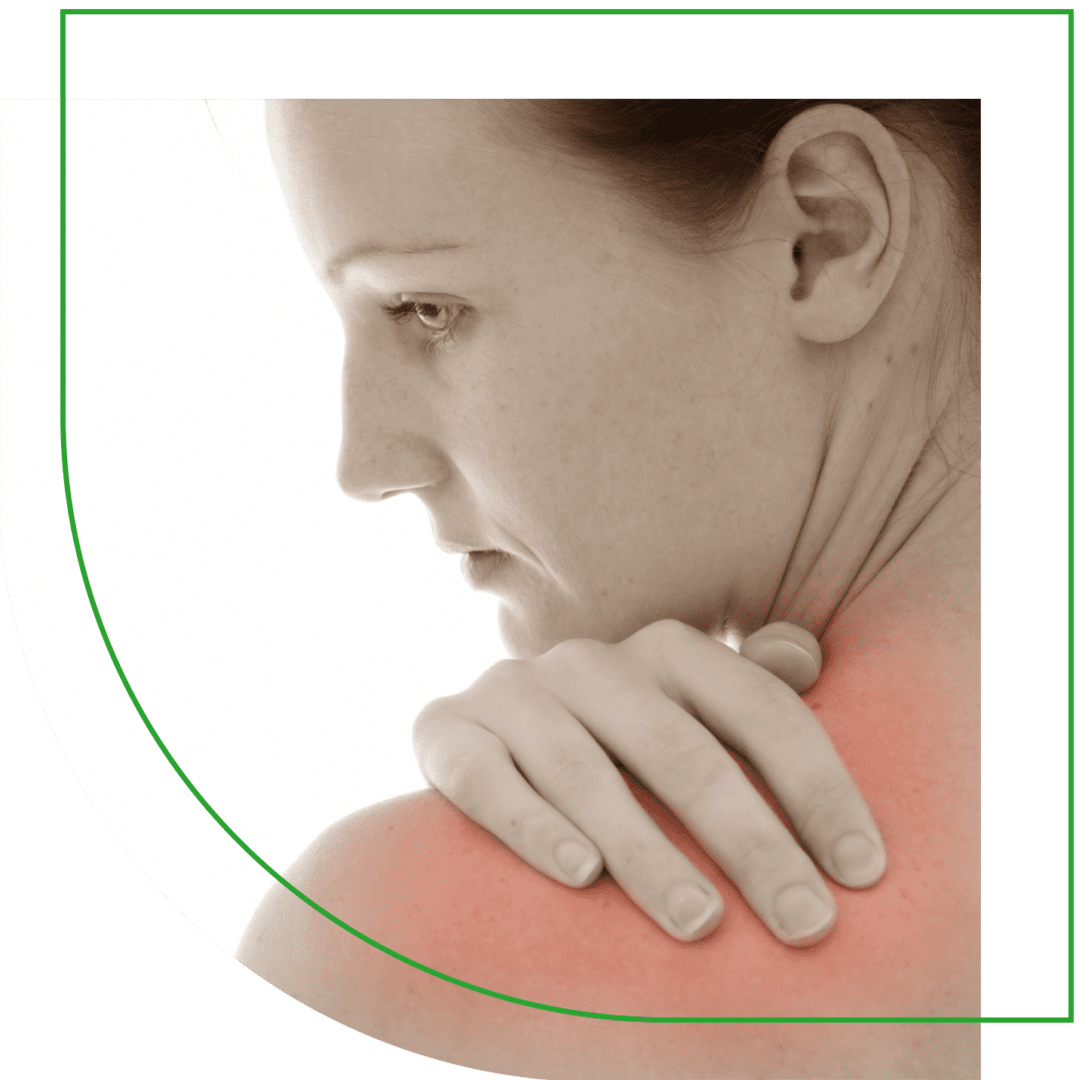
Shoulder Pain is Treatable!
Our telehealth physical therapy program for shoulder pain teaches you how to treat the foundation of your shoulder pain from the comforts of home on your schedule.
Technology has us spending a majority of the day in collapsed postures. Most shoulder pain conditions are associated with faulty scapular positioning on the rib cage as a result of collapsed posture.
We are experts in teaching you the exercises, lifestyle modifications and joint clearing techniques required to restore the healthy loading through neck and shoulders that is required for long-term injury management and prevention.
Visit our Pricing page for cost projections.
Your Telehealth Physical Therapy Workout Schedule
Level 1: Stand and walk from Neutral Spine Alignment.
Week 1: Watch Level 1 Workout (password protected)
- Complete Tele-PT Workout #1
- Complete Tele-PT Workout #2
Level 2: Get in/out of chair and bed without faulty loading.
Week 2: Watch Level 2 Workout (password protected)
- Complete Tele-PT Workout #3
- Complete Tele-PT Workout #4
Week 3:
- Complete Tele-PT Workout #5
- Complete Tele-PT Workout #6
Level 3: Pick object off floor and lift overhead without faulty loading.
Week 4+5: Watch Level 3 Workout (password protected)
- Complete Tele-PT Workout #7
- Complete Tele-PT Workout #8

Schedule Your Next Coaching Session!

You will achieve the following 6 functional milestones.

Restore your ability to get into neutral spine alignment (week 1).

Condition yourself to sit, stand and walk in a healthy posture (week 2).

Condition yourself to pick object off the floor with healthy loading in the neck (week 3).

Condition yourself to lift objects overhead with health loadin in the neck and shoulders (week 4).

Perform fitness program without faulty loading in the neck and low back (week 6).

Perform sport and recreation activities from neutral spine alignment. (week 8).
Frequently Asked Questions
Yes, collapsed upper back posture, forward head posture and head tilt posture can cause shoulder pain in one of two primary ways.
-
Head tilt posture positions the skull in front of the rib cage which places a tremendous amount of stress on the cervical spine. Not only is the head anteriorly displaced placing significant stress on the lower cervical spine, but it is tilted to one side which can cause a spinal rotation that could compress the nerves exiting the spinal cord at the base of the neck on that side. We refer to this as a cervical radiculopathy. These nerves supply the shoulder.
-
A collapsed upper back posture pulls the shoulder blades off their neutral position on the rib cage. A head tilt pulls the shoulder blade of the rib cage even more; we refer to this as a rounded scapulae or "winged scapulae". This causes faulty positioning of humerus within the shoulder socket and sets us up for shoulder impingement and rotator cuff tendonitis. The abnormal pull on the scapulae can elevate the first rib and cause thoracic outlet syndrome.
That depends on the source of the shoulder pain and if you have postural contributions to your shoulder pain. You cannot go wrong with posture correction exercises to start you on the right path to treating the foundation of your shoulder pain. The goal of your posture correction program should not be limited to just improving your ability to get into neutral spine alignment but rather condition you to function from neutral spine alignment.
Your posture correction program should have levels of progression to ensure safe progression. It should include lifestyle modification at each level of progression to help you spend more of your day in neutral spine alignment. These lifestyle modifications should include but are not limited to raising your seat height, raising your monitor, use of a wedge pillow and hourly posture restoration exercises.
When you can function with your upper back stacked and your skull on top of your rib cage you will likely have less shoulder pain. Then see a rehabilitation specialist for more specific exercises and/or stretches that may be appropriate.
That depends on the source of the shoulder pain and if you have postural contributions to your shoulder pain. Posture correction programs are usually a more effective way to treat the foundation of your shoulder pain. The goal of your posture correction program should not be limited to just improving your ability to get into neutral spine alignment but rather condition you to function from neutral spine alignment.
Your posture correction program should have levels of progression to ensure safe progression. It should include lifestyle modification at each level of progression to help you spend more of your day in neutral spine alignment. These lifestyle modifications should include but are not limited to raising your seat height, raising your monitor, use of a wedge pillow and hourly posture restoration exercises.
When you can function with your upper back stacked and your skull on top of your rib cage you will likely have less shoulder pain. Then see a rehabilitation specialist for more specific exercises and/or stretches that may be appropriate.
Most shoulder pain conditions have collapsed upper back posture and rounded shoulder posture as a contributing factor to shoulder pain. There are upper thoracic spine mobility exercises you can do with a foam roller to improve your ability to function with your skull on top of your rib cage and your shoulder blades in their neutral position on the rib cage. This restores healthy motion through the shoulder joint.
A 6"x36" foam roller can be used as a prop to help you sit more upright without back support. Other props like a wedge pillow can help you sit more upright. You can reduce shoulder pain with a telehealth physical therapy program that includes posture correction. The goal of your posture correction program should not be limited to just improving your ability to get into neutral spine alignment but rather condition you to function from neutral spine alignment. When you can function with your upper back stacked and your skull on top of your rib cage you will likely have less shoulder pain. Then see a rehabilitation specialist for more specific exercises and/or stretches that may be appropriate.
Yes, the Healthy Posture System can help you treat the foundation of your neck pain if you have collapsed upper back posture and/or forward head posture. The Healthy Posture System powered by PT on Demand combines weekly online physical therapy coaching with medical distribution of the Healthy Posture System video library to guide you through 12 levels of neutral spine conditioning.
No, the Healthy Posture System video library is password protected. Passwords are distributed during online coaching sessions and only when you have demonstrated the ability to perform all the exercises of the next workout in progression without losing neutral spine alignment. Lifestyle modification must also be reached in order to progress to the next level of the Healthy Shoulder Program within the Healthy Posture System.
How you sit plays a huge role in shoulder pain. If you sit collapsed, you have a forward head posture and possibly even a head tilt. These postures displace the skull off its neutral position over the rib cage. The weight of your head (about 8 lbs.) is no longer equally distributed across 7 cervical vertebrae; 2 or three vertebrae pick up the brunt of this load when you have forward head posture. This causes an abnormal pull on the shoulder blade (scapulae) on the side of your head tilt. This muscle imbalance pulls the shoulder blade off its neutral position on the rib cage, putting you at risk for shoulder impingement, rotator cuff tendonitis, and thoracic outlet syndrome.
Posture correction can restore your ability to sit upright. A good posture correction program should not just stop at restoring your ability to get into neutral spine alignment. It should condition you to perform all your daily activities without losing neutral spine alignment. The Healthy Posture System will guide you through 12 levels of progression: each with lifestyle modification milestones to address all aspects of your daily life.